

Why Cats Back Out of Harnesses—and How to Reduce the Risk
A cat can look perfectly secure while standing, then seem to become half its size the moment something startles it. The body drops, the shoulders narrow, and the cat reverses while the leash pulls the harness forward. That opposing motion is often how a cat backs out of a harness.
A loose neckline, an oversized body opening, misplaced straps, or steady forward pulling from the person can make the opening larger. No harness can promise that a cat will never escape. A better safety plan combines the right shape and size with an indoor movement test, gradual training, a carrier, and close supervision.
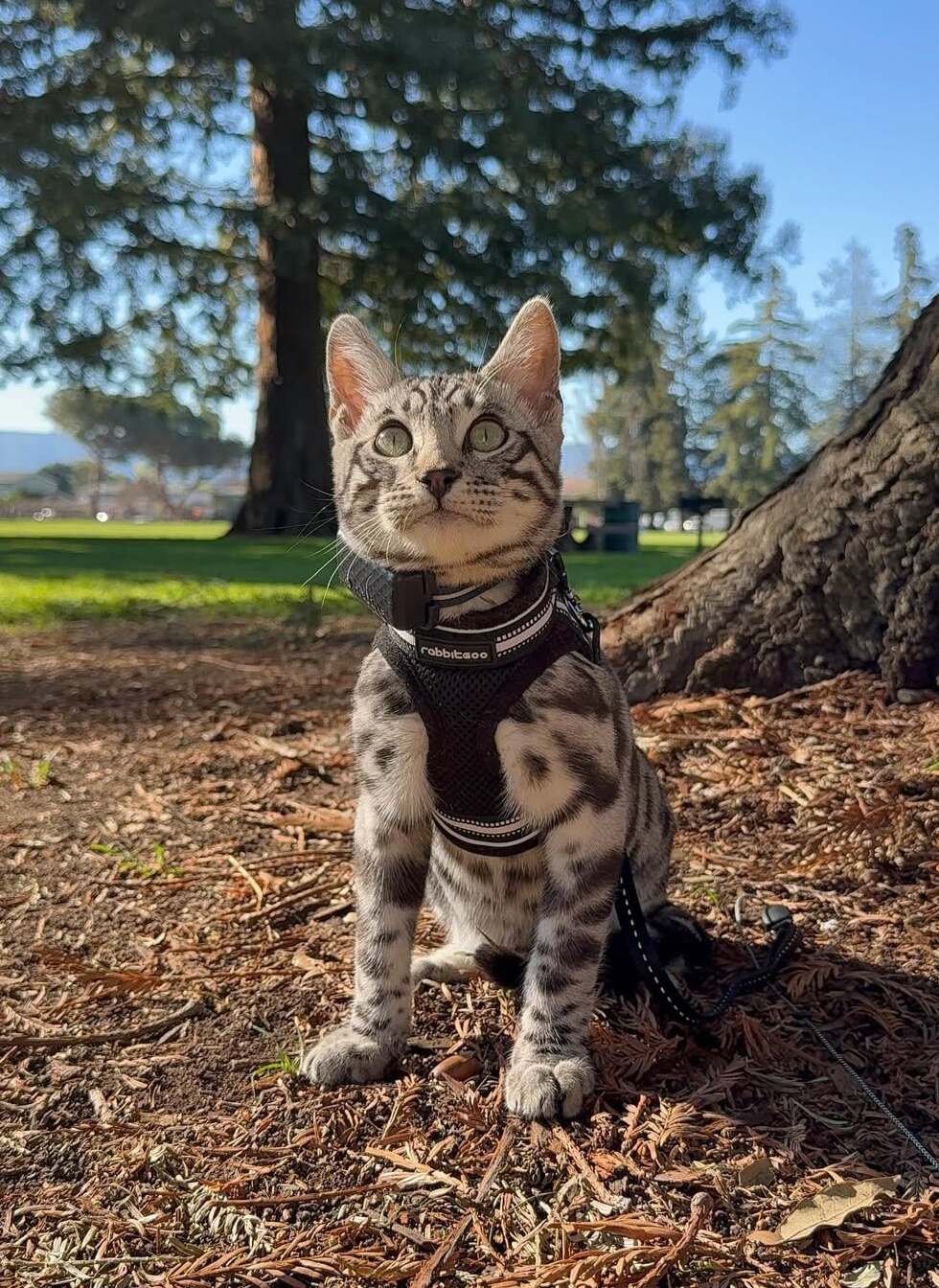
Why backward movement changes the fit
When a cat walks forward, the harness usually rests in its intended position. When the cat crouches and moves backward while the leash stays taut, the harness is pulled forward as the body moves the opposite direction. Cats can narrow and rotate their shoulders, making openings that looked secure while standing behave differently.
So do not finish the fit check while the cat is standing like a statue on the kitchen floor. Watch what the openings do when the cat crouches, turns, lowers the head, and takes a couple of controlled backward steps indoors.
Five common reasons a cat slips out
1. The neckline is too loose
A wide neck opening can travel over the shoulders when the cat reverses. The harness may be the wrong size, or the neck and chest may need more independent adjustment.
2. A leg enters the wrong opening
If the body section is loose or twisted, an elbow can slip inside the harness. Once one leg is misplaced, the rest of the body may follow. Check leg openings during walking and crouching.
3. The leash stays tight while the cat retreats
Pulling forward can create continuous pressure in the direction that opens the harness. When your cat becomes worried, move closer, reduce leash tension, and encourage a turn toward you instead of trying to pull the cat forward.
4. The cat was not prepared for the environment
A loud vehicle, dog, person, or unfamiliar surface can trigger a rapid retreat. Indoor harness and leash practice helps, but the first outdoor area should also be quiet, familiar, and easy to leave.
5. The harness shape does not match the cat
Cats vary in chest depth, shoulder width, coat, and body condition. If one part is secure only when another becomes restrictive, try a different size or design rather than overtightening.
The indoor reverse-movement fit test
- Close every door and window and remove snag hazards.
- Put on the harness exactly as shown for that model and check every buckle.
- Slide one finger beneath the main contact areas without forcing it.
- Let your cat walk, sit, crouch, turn, and lower the head.
- Hold a loose leash and use a treat to invite one or two backward steps.
- Watch whether the neck opening widens, the body panel rotates, or an elbow enters another opening.
- Stop and readjust if any part starts to slip. Do not continue pulling to “see what happens.”
Follow the exact Rabbitgoo cat harness wearing steps for your design. Straps, hook-and-loop panels, and buckles only work as intended when they are all positioned and fastened correctly.
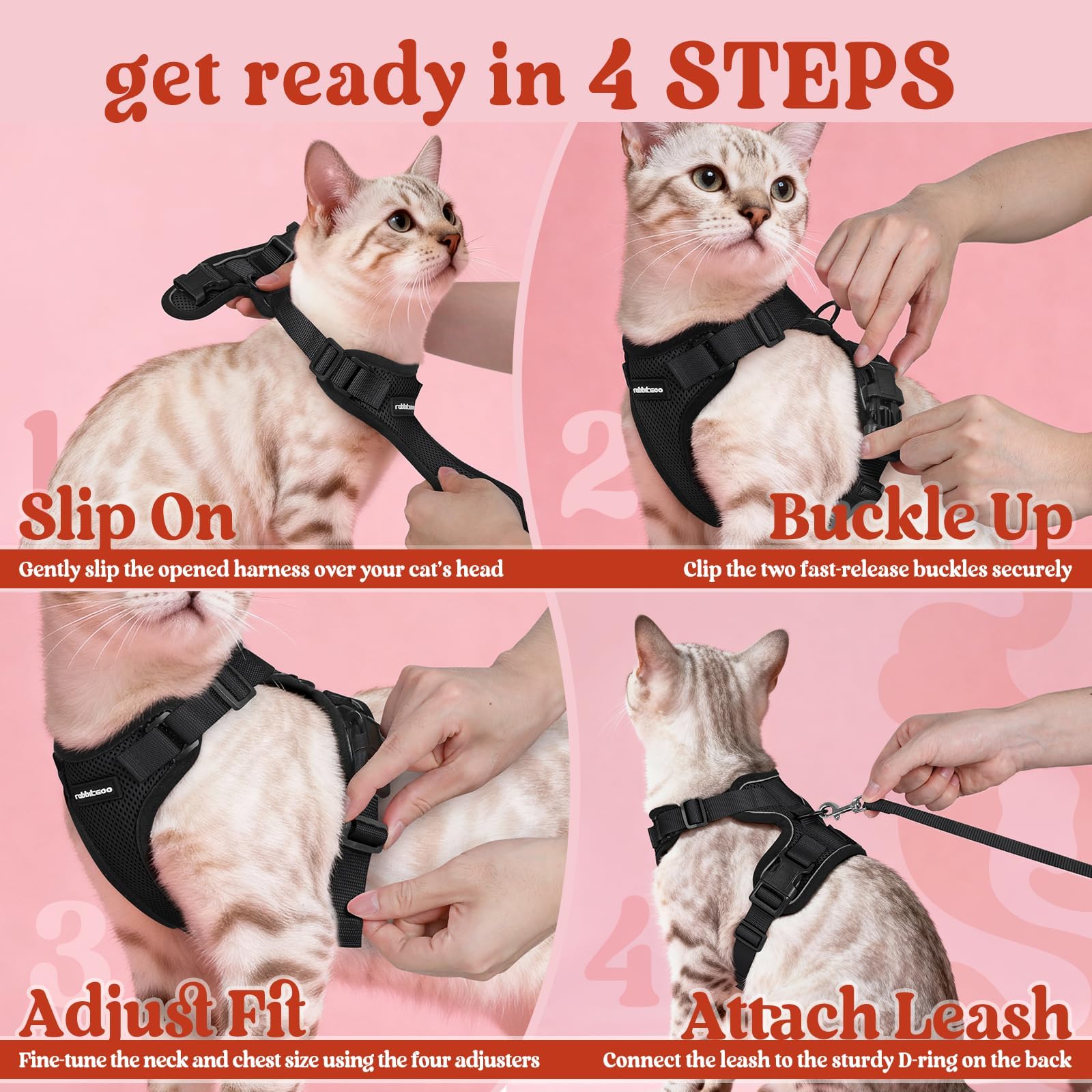
Check the neckline, buckle, and leash connection indoors before adding the distractions of an outdoor space.
What to do when your cat starts backing up
- Do not keep pulling forward. Move toward your cat to reduce opposing tension.
- Lower the stimulation. Create distance from the dog, person, sound, or object that triggered the retreat.
- Invite a turn. Use a practiced cue or treat so your cat turns sideways or toward you.
- End early. Return the cat to a secure carrier or indoor area before another attempt.
Bring a carrier even when the plan is “just a few minutes.” It gives the cat a secure way into and out of the area, plus a familiar place to retreat if a truck, loose dog, or sudden noise changes the mood.
Fit and training work together
A more secure harness does not replace acclimation. Cats that freeze indoors or fight the equipment are not ready for outdoor distractions. Use our indoor cat harness training plan to build comfort with wearing, movement, leash slack, and door routines.
Likewise, training cannot fix a gaping or poorly placed harness. Re-measure and compare with the chart for the exact model. Check fit again after the cat has moved because fur and soft padding can settle.
The two-minute check before going outside
- Inspect the harness for wear, loose stitching, or damaged closures.
- Confirm that all buckles and hook-and-loop panels are fully secured.
- Repeat a brief movement check indoors.
- Attach the leash to the intended ring.
- Bring a secure carrier.
- Choose a quiet time and location.
- Stay close and supervise continuously.
Cat harness escape FAQ
Does “escape proof” mean my cat cannot get out?
No. It describes design features intended to reduce escape risk when the harness is correctly sized, fitted, and used. Behavior, body shape, wear, and leash handling still matter.
Should I make the harness very tight?
No. Overtightening can cause discomfort and restrict movement. Aim for a snug, stable fit and use the model-specific fit guidance.
Why can my cat escape only outdoors?
Outdoor triggers may produce a stronger crouch or backward pull than you saw indoors. Build difficulty gradually and practice in the quietest available setting.
Where can I compare Rabbitgoo cat harnesses?
Explore the Rabbitgoo cat harness and leash collection and use the size chart for the exact model.