

Why Does My Dog Harness Rub Behind the Front Legs?
A worn patch of fur behind one front leg is easy to miss until the harness comes off. Sometimes the first clue is a dog that slows down, scratches at the strap, or hesitates when the harness appears. When a dog harness is rubbing behind the front legs, the useful question is not simply “How much tighter should it be?”
The side straps may be sitting too close to the armpits, the harness may be moving with every stride, or the size and shape may not match the dog’s body. A loose harness can rub, but so can one that is too small or badly balanced. Stop using it if you see broken skin, swelling, bleeding, or obvious pain. Allow the area to recover, and contact a veterinarian if irritation is significant or does not improve. For early redness or coat wear, the checks below can help identify the mechanical cause before the next walk.
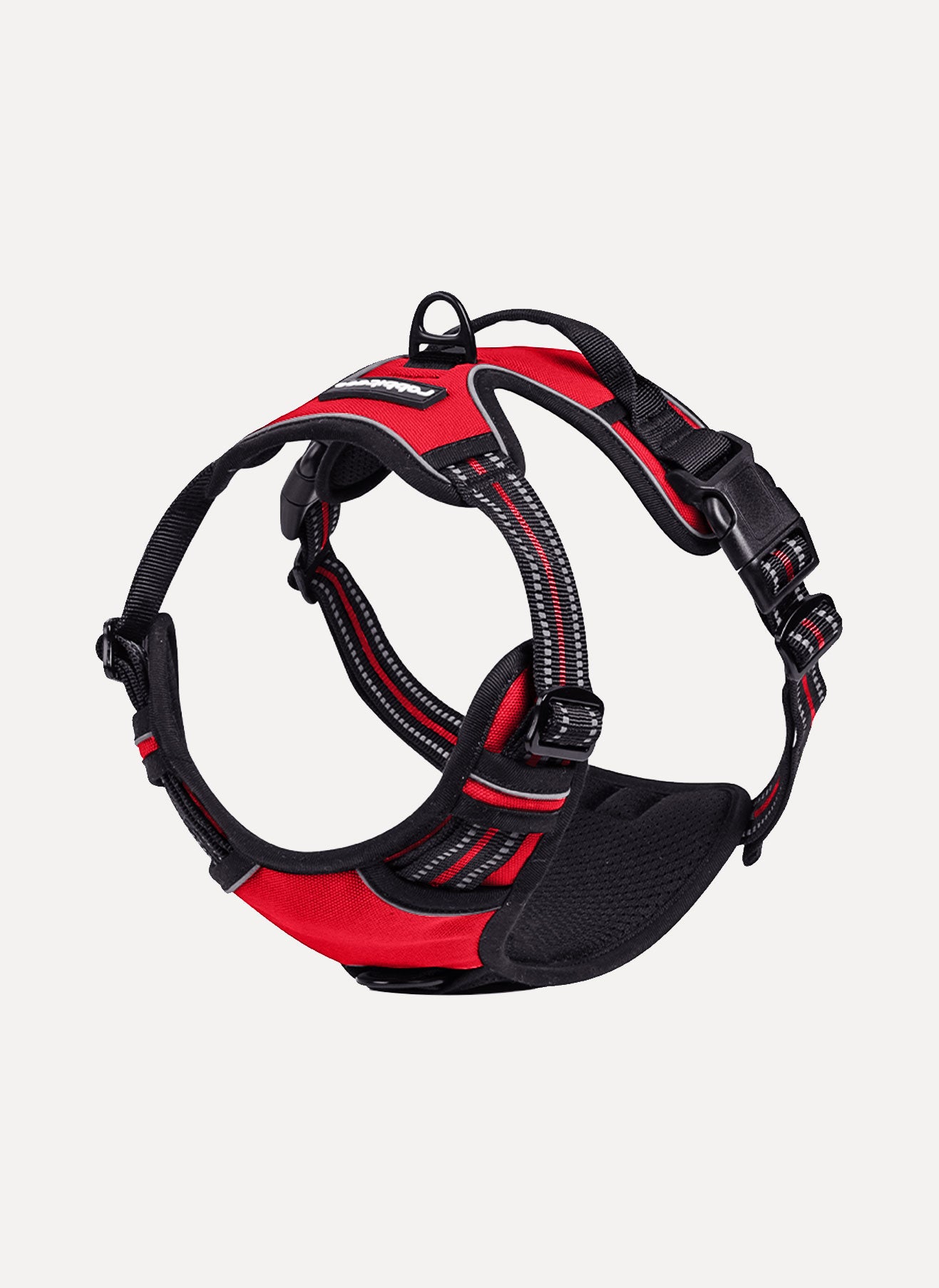
Why harnesses rub near the armpits
The harness is sitting too far forward
If the girth straps sit directly behind the elbows, the front legs can touch them on every step. This may happen because the body section is too short, the chest panel is pulled upward, or the entire harness migrates forward under leash pressure.
The harness is rotating
A loose or uneven fit lets one side move closer to a front leg. The repeated side-to-side movement can abrade the coat even when the material feels soft. Rotation is especially noticeable when the leash pulls from one side or when only one strap was tightened.
The size is too small
A small harness may technically buckle while placing the panels and straps in the wrong locations. If most adjusters sit at their maximum extension and the chest panel is drawn tight toward the throat, sizing up—or choosing a different shape—may create necessary leg clearance.
The size is too large
Extra room can also cause friction. Loose straps slide across the coat, and a large neck opening can allow the harness to shift backward or sideways. Look at movement, not just whether two fingers fit beneath a strap.
The harness shape does not match the dog
Dogs with deep chests, narrow waists, compact bodies, broad shoulders, or unusual neck-to-chest proportions may not fit every harness shape. If you cannot center the chest and create leg clearance at the same time, more adjustment points or another panel length may work better. See our guide for deep-chested dogs.

This side view makes it easier to check where the harness edge sits in relation to the moving front leg.
Find the rubbing point in five steps
- Inspect the contact pattern. Note whether rubbing occurs on one side or both and whether it is at an edge, strap, buckle, or seam.
- Re-measure your dog. Measure the lower neck and the widest chest while standing. Compare with the exact model’s chart.
- Center the harness. Place the chest panel on the breastbone and the back panel along the spine before adjusting.
- Balance left and right. Tighten in small increments so matching straps remain similar in length.
- Watch a full stride. Have your dog walk toward and away from you, turn both directions, and sit. Look for repeated contact behind the legs.
Use the Rabbitgoo measuring guide before changing sizes. Weight can be a useful reference, but neck and chest measurements are more important for fit.
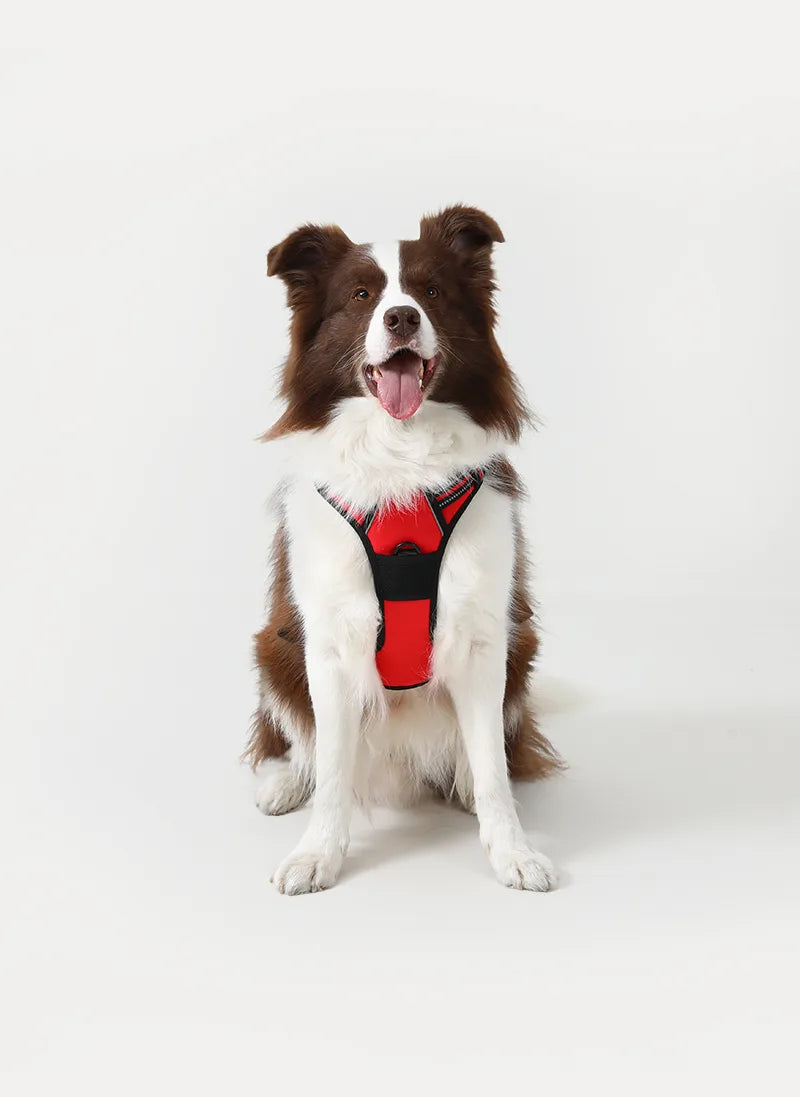
How much space should be behind the front legs?
There is no universal “two fingers behind the leg” rule because dog size and harness construction vary. Watch the dog walk instead. The front leg should complete a normal stride without brushing the same harness edge on every step, and the girth strap should stay on the rib cage rather than creeping into the soft armpit.
Also check the front view. A chest panel that is too wide can interfere even when the side straps sit farther back. A panel that is too narrow may drift and place an edge against one leg.
Should you add padding or a sleeve?
A smooth sleeve can reduce friction in some cases, but it should not be used to hide a bad fit. Added material changes strap thickness and may affect buckle operation. First solve position, stability, and size. If the harness fits correctly and your dog has a sensitive coat, choose purpose-built soft edging and check the skin frequently.
When adjustment is not enough
Consider another size or model when:
- the chest panel cannot stay centered;
- leg clearance disappears as soon as the leash is attached;
- one measurement fits the chart but another falls outside it;
- all adjusters are at an extreme position;
- the harness still twists after balanced adjustment.
The Rabbitgoo Dog Harness Size & Wear Guide helps compare product families. Always finish with the chart on the specific product page.
A quick routine for the next few walks
- Pause after five minutes and check the fit again; the living-room fit is only the first check.
- Keep straps flat and free of twists.
- Remove trapped hair from buckles and hook-and-loop areas.
- Clean dirt and grit from fabric according to the product care instructions.
- When the harness comes off, look at the coat and skin after longer walks, especially during the first week.
- Re-measure growing puppies and dogs whose weight or coat has changed.
Harness rubbing FAQ
Can a harness be snug and still rub?
Yes. It may be too small, too far forward, or the wrong shape. Snugness alone does not guarantee correct panel and strap placement.
Why does only one armpit rub?
One-sided rubbing often points to rotation, uneven strap length, asymmetric leash pressure, or a chest panel that is not centered.
Will a front clip cause rubbing?
A front attachment can rotate a loose or poorly centered harness, but rubbing is not inevitable. Balanced fit and calm leash handling matter. Compare attachment points in Front-Clip vs. Back-Clip Dog Harnesses.
Where can I compare other options?
Browse Rabbitgoo dog harnesses and walking gear, then check the exact size range and design features for your dog.