

How Tight Should a Dog Harness Be? 5 Fit Checks
You buckle the harness, slide two fingers under a strap, and everything seems fine. Then your dog takes a few steps and the chest panel drifts sideways—or the harness creeps toward the throat. That is why the answer to how tight should a dog harness be involves more than one finger test.
A well-fitted harness feels snug and stable without pressing into the skin or changing the dog’s natural movement. You should usually be able to slide two fingers flat beneath the straps, but also check the neckline, chest panel, girth, and space behind the front legs. Do the five checks below indoors, then repeat them after a few minutes of walking, once the padding and coat have settled.
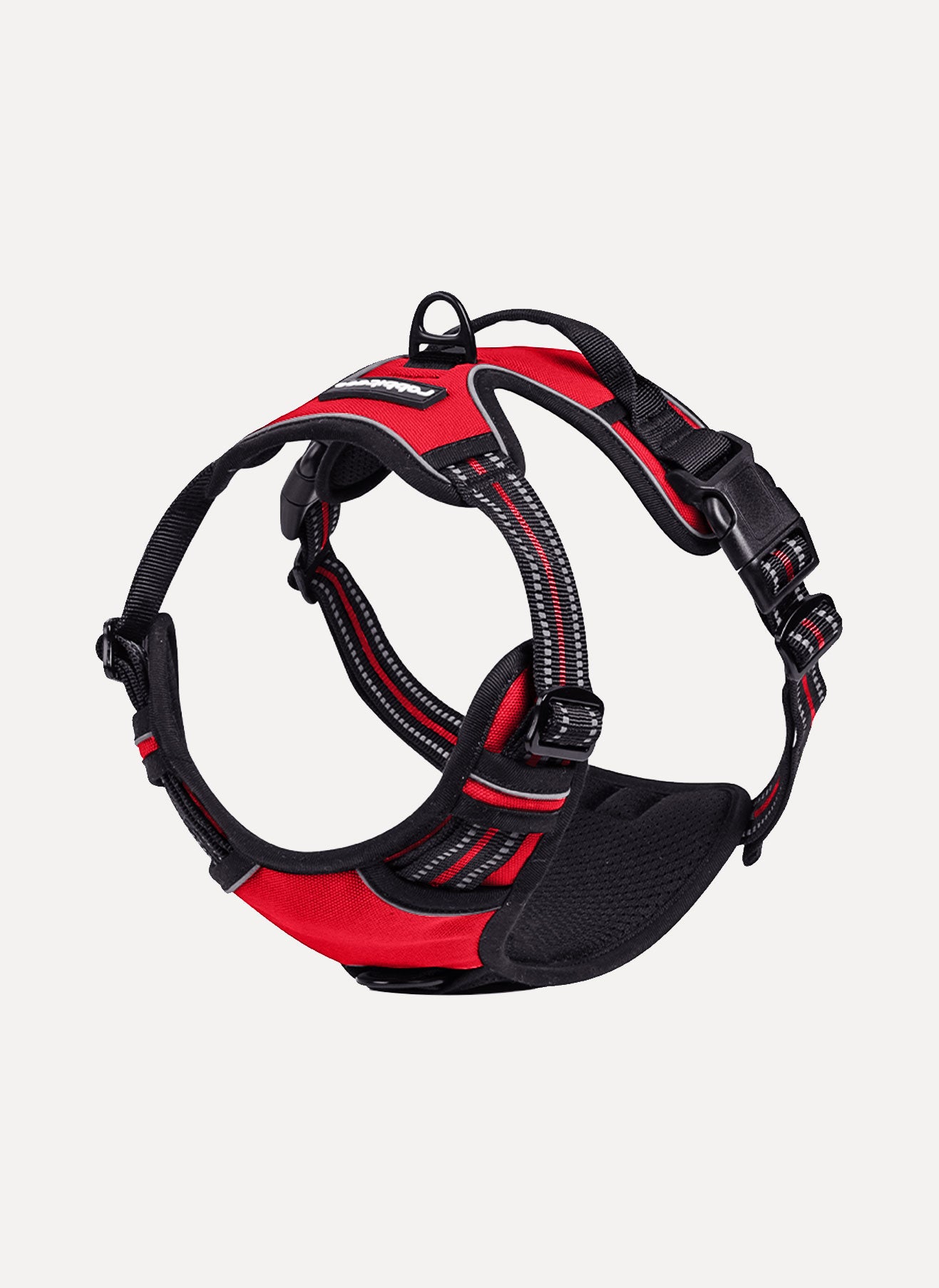
The quick answer: snug, centered, and movement-friendly
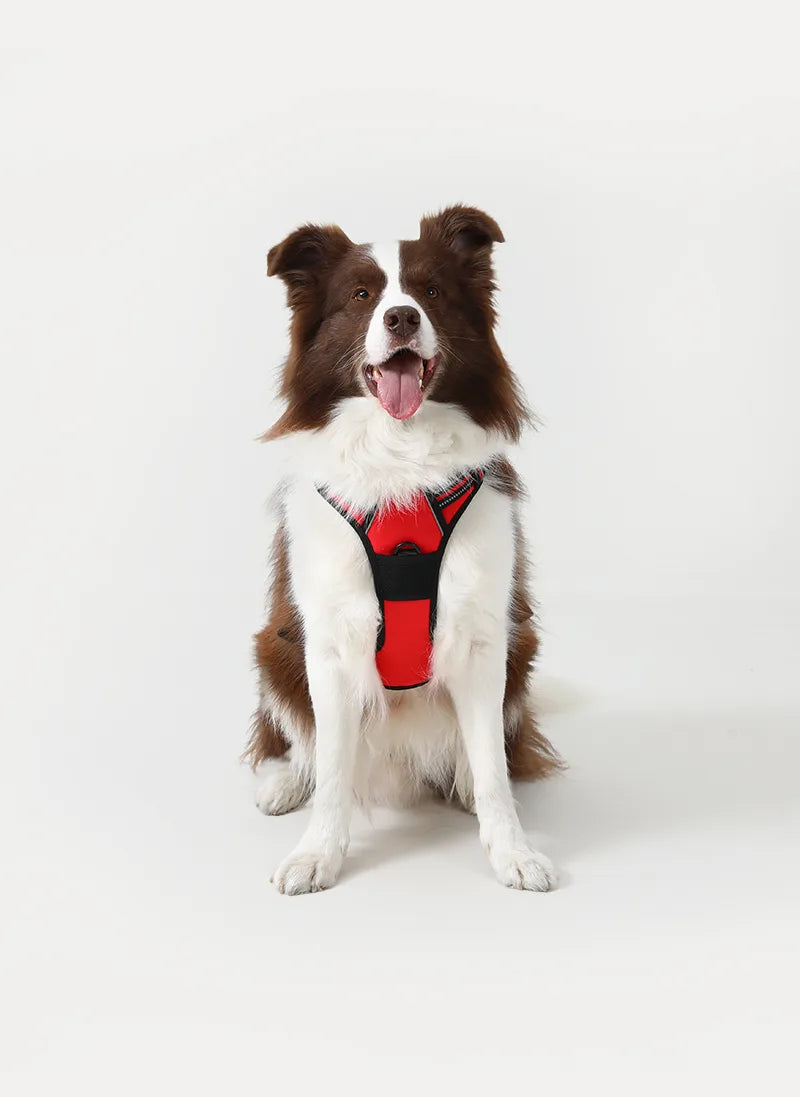
Think snug, not cinched. The chest and back panels should remain close to center, and the straps should lie flat instead of sagging, curling, or digging in. Your dog should still be able to walk, sit, turn, and lower the head normally. With gentle leash pressure, the harness may shift a little, but it should not swing far to one side or leave a large opening at the neck.
The common mistake is correcting every wobble by tightening another strap. That can trade one problem for pressure, rubbing, or shortened shoulder movement. Too much slack causes a different problem: an elbow or shoulder may find its way into the wrong opening when the dog backs up.
Five dog harness fit checks
1. Check the lower-neck opening
The neckline should sit low enough to avoid the throat and high enough that it does not gape over the shoulders. Slide two fingers flat beneath the strap. Then gently guide the harness forward and backward. If the opening can pass easily over a shoulder or become wide enough for the head to start slipping through, the fit is too loose or the harness shape may not suit your dog.
2. Center the chest panel
The front panel should rest over the breastbone, not pull into the soft throat area or drift toward one armpit. A centered panel helps distribute leash pressure more evenly. If it will not remain centered after balanced adjustment, recheck the size and the relationship between neck and chest measurements.
3. Check the girth straps
Run your fingers under the straps around the widest part of the rib cage. They should feel secure without pinching. Look for flat contact on both sides, with no hanging loops. After a few minutes of movement, recheck the fit because fur and padding can settle.

Fasten the buckles and balance both sides before judging whether the harness is snug enough.
4. Confirm clearance behind the front legs
The side straps and panel edges should not sit directly in the armpits. There should be enough room for the front legs to move through a full walking stride without repeated contact. If you see redness, broken fur, hesitation, or a shortened stride, stop using the harness and troubleshoot the fit before the next walk. Our guide to harness rubbing behind the front legs explains the common causes.
5. Test movement and gentle leash pressure
Have your dog walk, turn, sit, and take several steps backward indoors. Watch the back panel and chest panel. Minor movement is normal, but the harness should not spin around the body, slide toward the throat, or open enough for a leg to enter the wrong space. Learn what reverse pressure can reveal in Why Dogs Back Out of Harnesses.
Signs a dog harness is too tight
- You cannot slide two fingers flat under a strap without forcing them.
- The straps leave deep impressions that remain after the harness is removed.
- Your dog’s gait changes, especially around the shoulders or front legs.
- The chest panel is pulled upward toward the throat.
- Your dog scratches, freezes, turns to bite the harness, or avoids putting it on.
Behavior alone does not prove that a harness is too tight—a dog may also be unfamiliar with the sensation—but physical pressure marks or restricted movement mean the fit needs immediate attention.
Signs a dog harness is too loose
- The neckline gaps when the dog lowers the head or backs up.
- The chest panel slides toward either armpit.
- The back panel rotates significantly when the leash is attached.
- A leg can enter the neck or chest opening.
- Straps hang away from the body or adjustment sliders move during use.
If tightening solves one problem but creates another, the size or harness shape may be wrong. Do not rely on body weight alone. Measure the lower neck and widest part of the chest, then compare those numbers with the chart for the exact model. Start with the Rabbitgoo harness measuring guide.
What if your dog is between sizes?
Do not automatically choose the larger size. Compare both measurement ranges and ask which size keeps your dog away from the extreme end of the adjustment range. Consider coat thickness, body shape, and whether the neckline and chest need different amounts of adjustment. A deep-chested dog with a narrow waist, for example, may need a more adjustable shape than weight-based sizing suggests.
Use the Dog Harness Size & Wear Guide to compare Rabbitgoo series, then check the chart on the exact product page before ordering.
When to recheck the fit
For a new harness, make the fit check part of the first few walks. Check again after washing, a seasonal coat change, a growth spurt, or any time someone else has moved the sliders. When the harness comes off, a quick look at the coat and skin can catch a small fit issue before it turns into a sore spot.
Dog harness fit FAQ
Is the two-finger rule always correct?
It is a useful starting point, not a complete fit test. Two fingers should slide flat beneath the straps, but the harness must also stay centered and secure during movement.
Should a no-pull harness be tighter?
No. A front attachment does not require an uncomfortably tight fit. It needs a stable, centered fit so leash tension can redirect rather than spin the harness. See what a no-pull harness can and cannot do.
Can a loose harness cause rubbing?
Yes. Loose material can move repeatedly over the coat and skin, especially behind the front legs. Rubbing can also result from a harness that is too small or the wrong shape.
Where can I compare Rabbitgoo dog harnesses?
Browse Rabbitgoo dog harnesses and walking gear, then use the product-specific size chart rather than assuming the same size across every model.